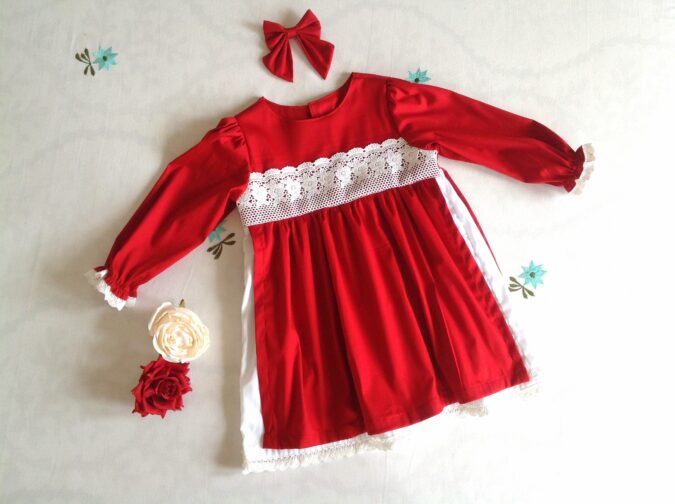
After all these years of sewing patterns for kids, I finally have a free Christmas dress sewing pattern for girls! With a few tweaks and additions to my classic dress patterns, you can easily whip up this festive Christmas dress without any hassles.
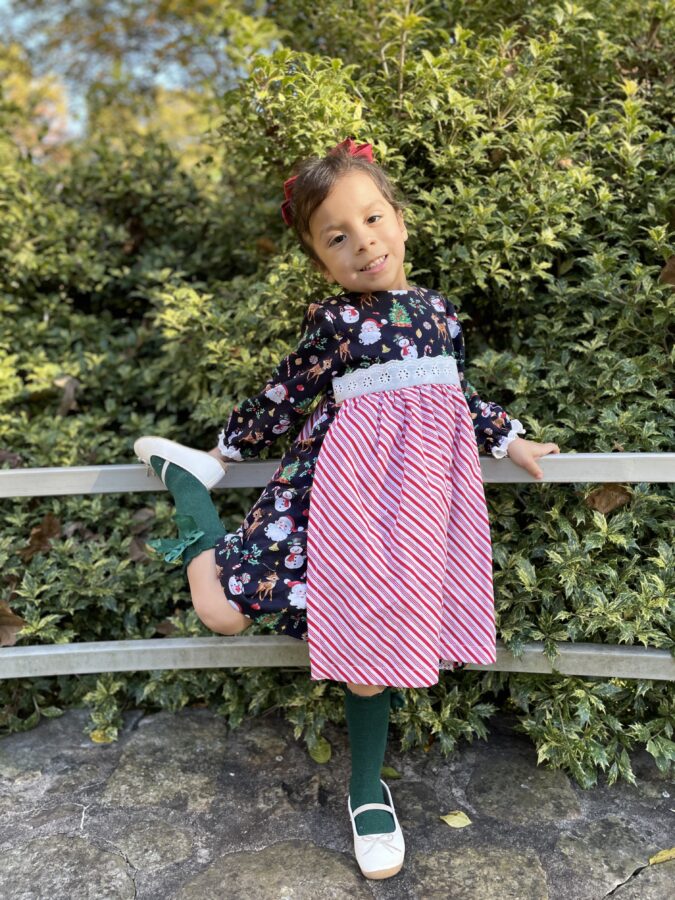
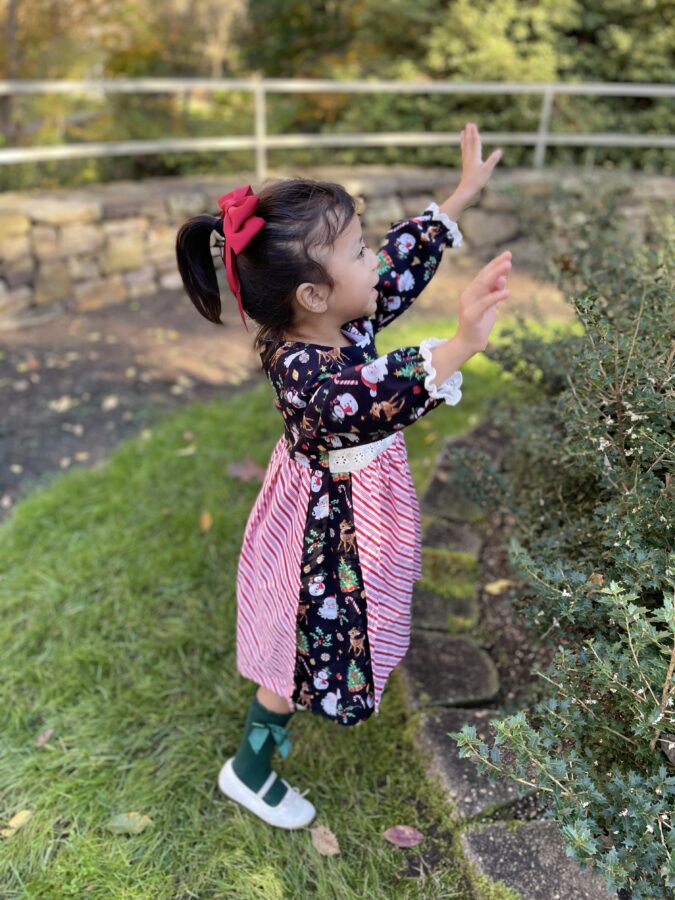
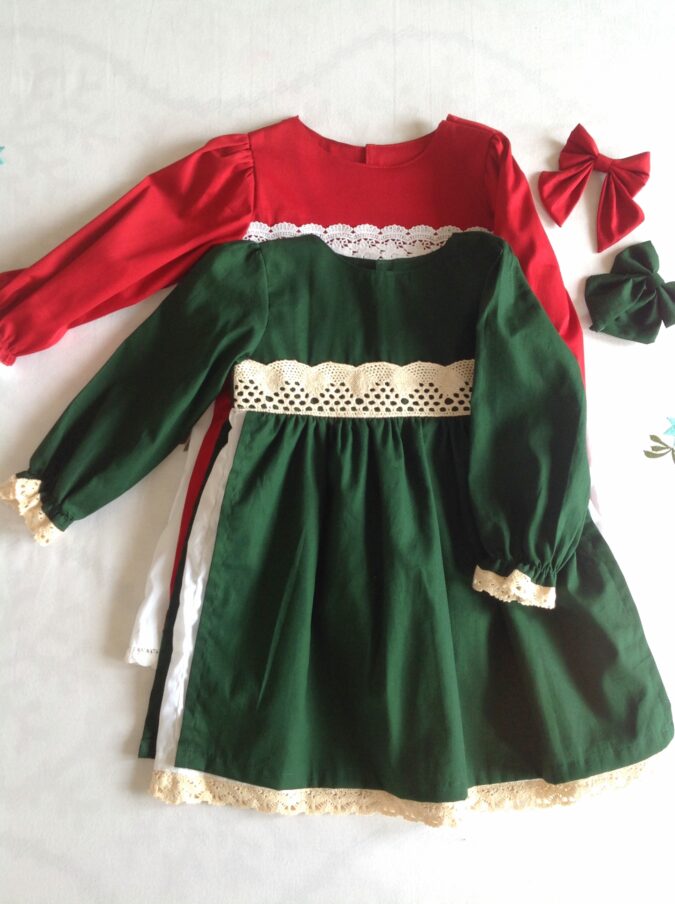
The dress features layered skirts, sleeve options, and trim details. You can easily add your own extra trims, mix Christmas colors and prints, and experiment with different fabrics to create your own unique version of this girls’ Christmas dress.
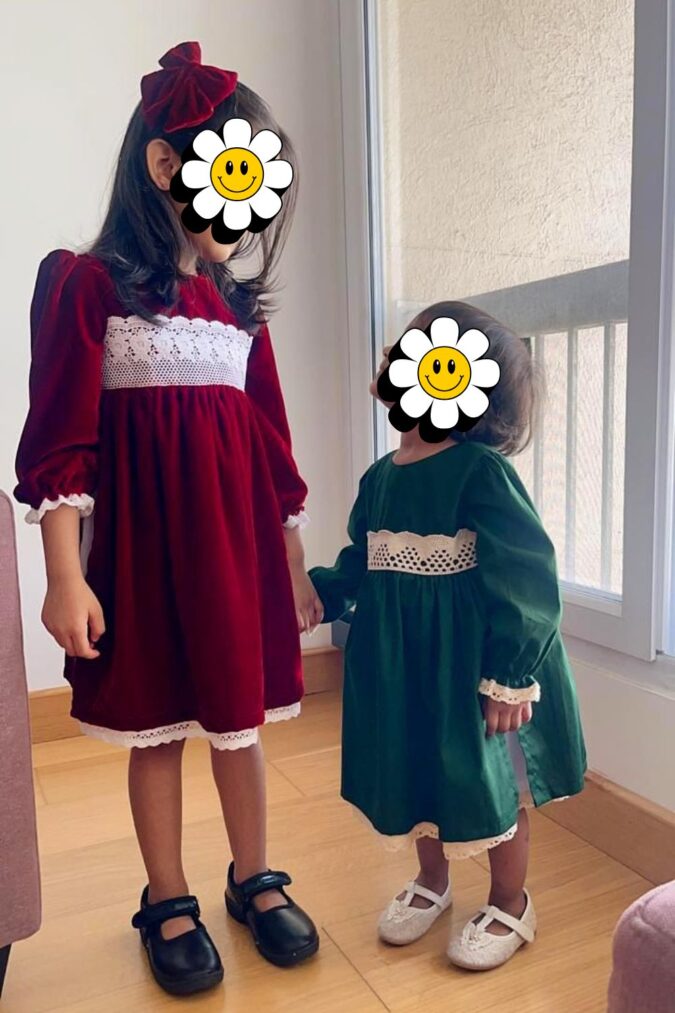
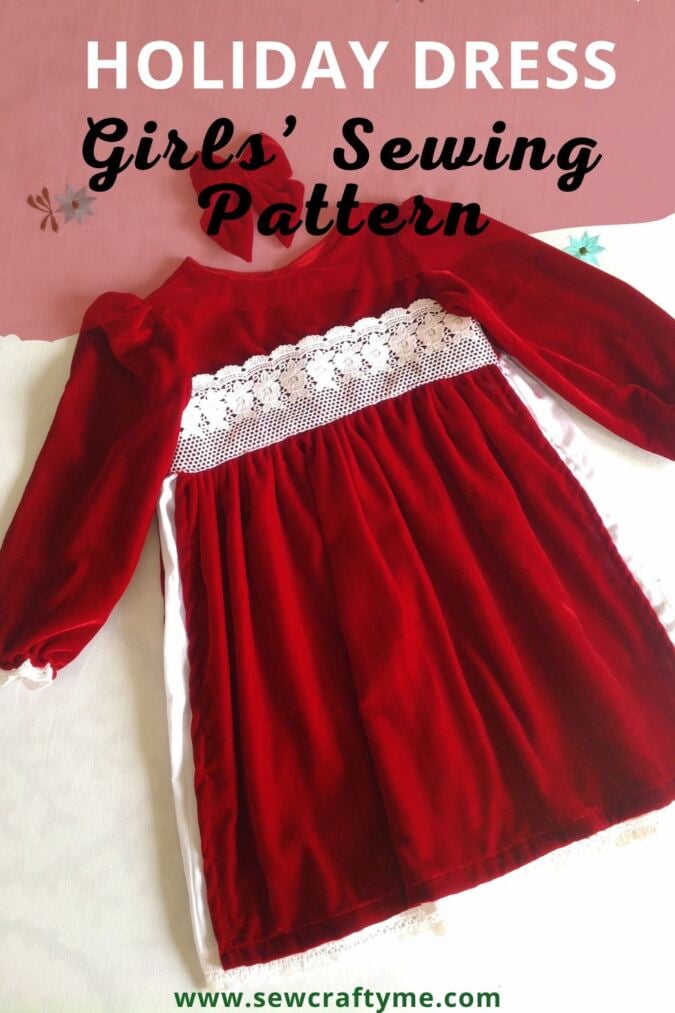
My instructions show an all-cotton version with cotton lace, making the sewing process easier and neater. I’ve also tried using velvet fabric—the solid red one the little girl is wearing above—for a luxurious and beautiful Christmas look.
Free Christmas Dress Sewing Pattern for Girls
Materials Required:
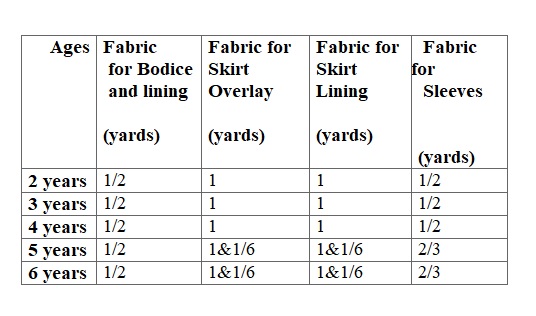
1) Medium weight cotton fabric for the bodice, skirt layers and sleeves- requirement specified in the table- 3 below. **Please note that the skirt lining in this case is not a typical inner lining — it will be visible, so we’ll be using a more attractive fabric of our choice. Here, I’ve used a solid-colored contrasting fabric. You may choose eyelet fabric, printed fabrics, or any material you prefer, but cotton is recommended.
2) 4 pairs of KAM snaps in matching color (or if you know how to sew buttonholes, you may use ordinary buttons too.
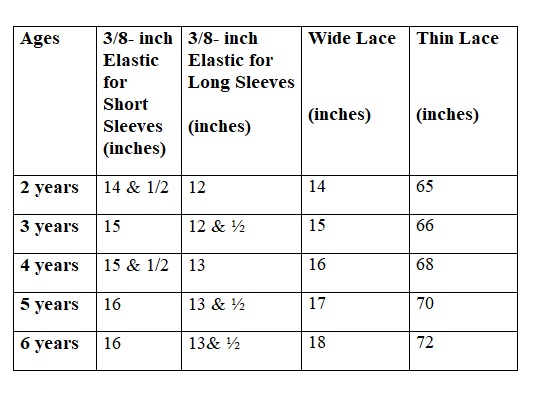
3) Thin cotton lace about 1.5- inches wide for the sleeves and lower hem requirement specified in the table-4 below.
4) Wide cotton lace about 2.5- inches wide for 2 to 3 years and 3- inches for higher ages- requirement specified in the table-4 below.
3) Sewing Notions.
4) 3/8- inch elastic- requirement specified in the table-4 below.
5) Pattern pieces at the end of the PDF. ****Enter your email address and click the subscribe button below to download the template.
I suggest you read the entire pattern once before starting to get a general idea
All the fabrics used here are of 44/45 inches width.
The fabrics shown here are only for illustration purposes and as such may vary from the original.
The seam allowance is 3/8 -inch unless otherwise specified.
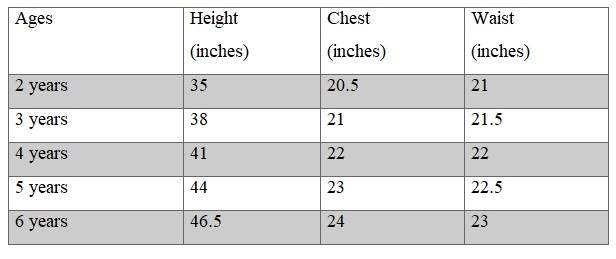
Size Chart
Table-1
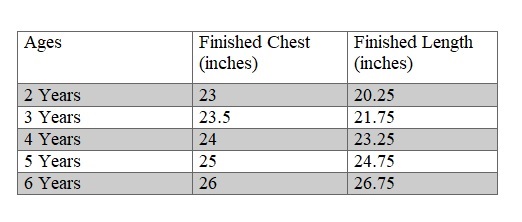
Approximate Finished Measurements.
Table-2
Fabric Requirements
Table-3
Elastic and Lace Requirements
Table-4
Measurements
**The dress is supposed to hit below the knee. Change the length of the skirt pieces, if you would like it shorter or longer. **Please note that the length does not include the trim (lace).
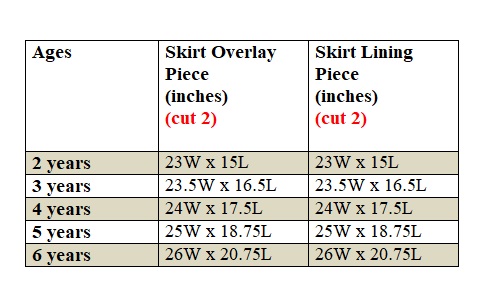
In the table below, “W” stands for the width and “L” stands for the length of the fabric piece to be cut.
Table-5
Sewing
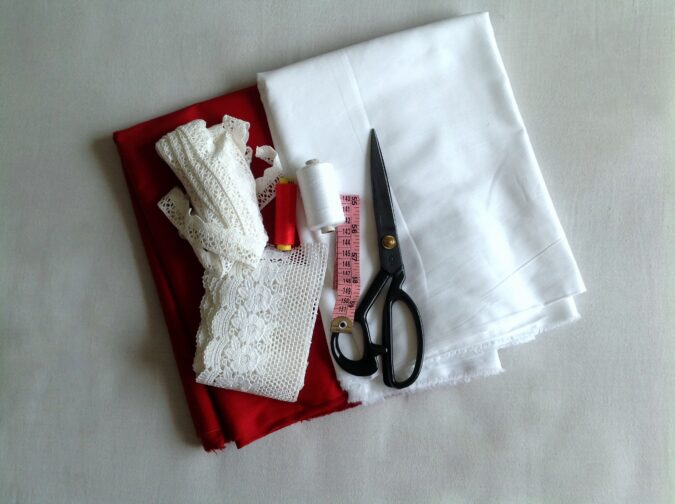
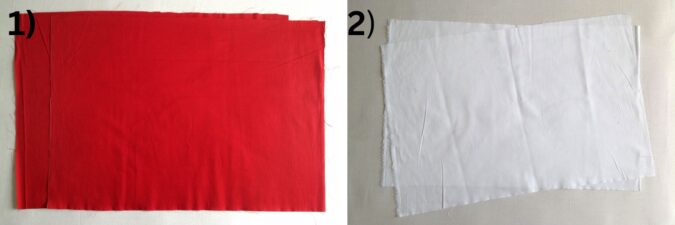
Gather the supplies.
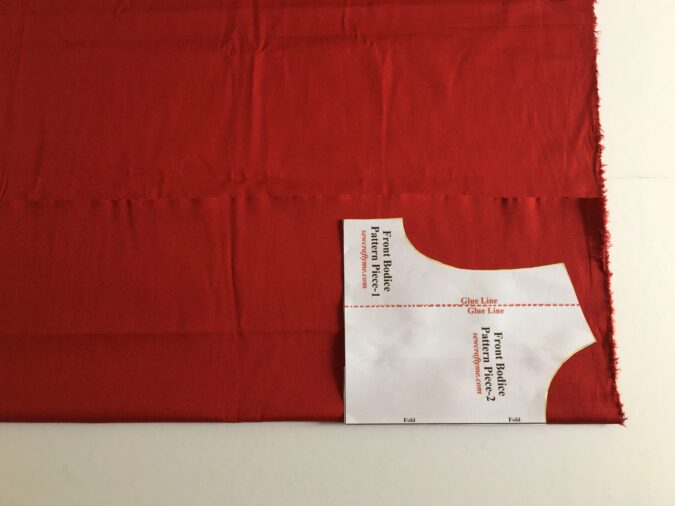
Cut the pattern template for the front bodice, fold the fabric to fit the width of the template and place the template on the fold. Mark around it and cut to get the front bodice piece. Repeat the steps to get the front lining piece.
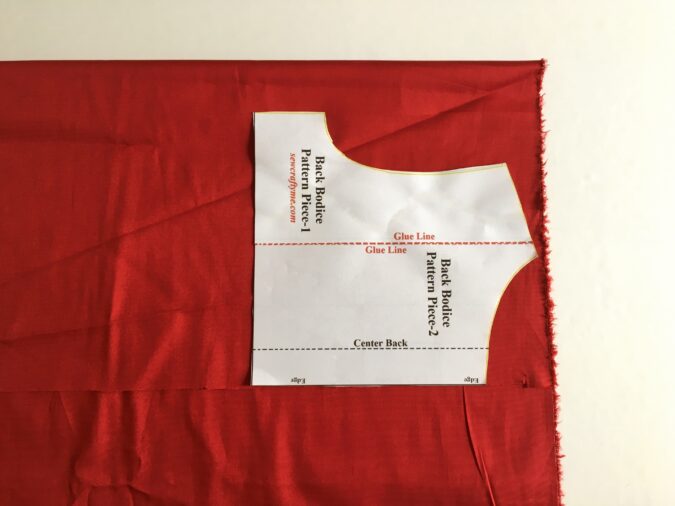
Next, cut the back pattern template and keep it along the edge of the folded fabric as shown in the picture. Mark and cut to get two pieces of the back bodice. Repeat the steps to get two more of the same piece (for the back lining).
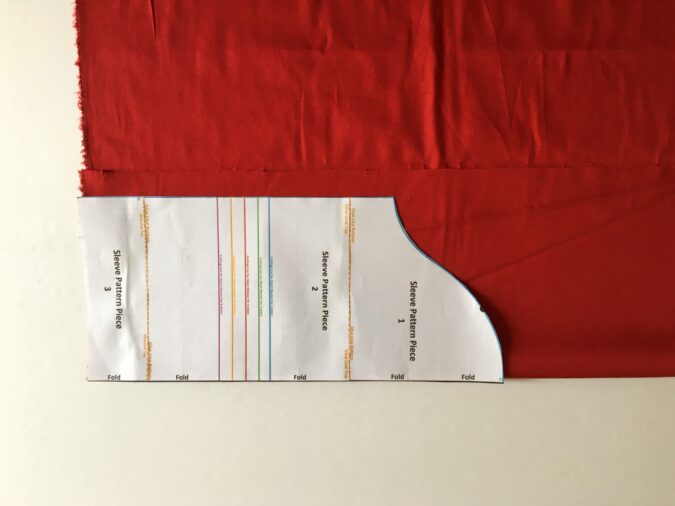
Also, cut your two sleeves using the respective templates. Make sure to transfer the center and the marks for the gathers onto each sleeve.
You will get your front bodice, back bodices, lining and sleeve pieces like the above.
Cut your skirt overlay and lining pieces, referring to table-5 above.
Let’s start sewing.
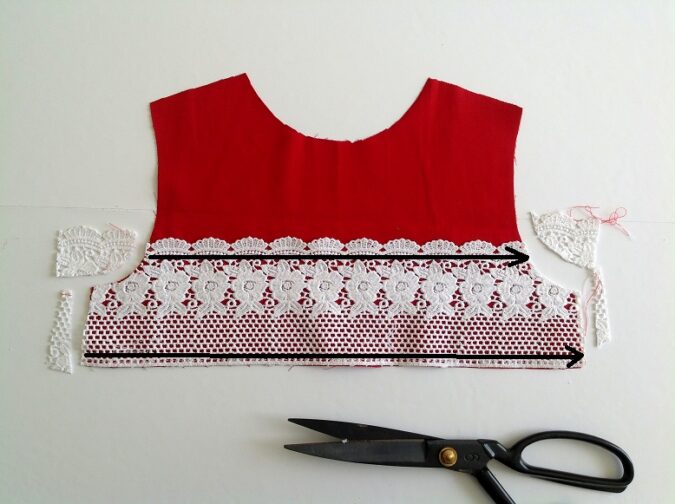
Take the wider lace (2.5 inches) and lay it right side up over the right side of the front bodice. Make sure it extends slightly beyond the armholes. Sew along the upper and lower edges to attach the lace. Trim off any excess lace along the armhole and side edges.
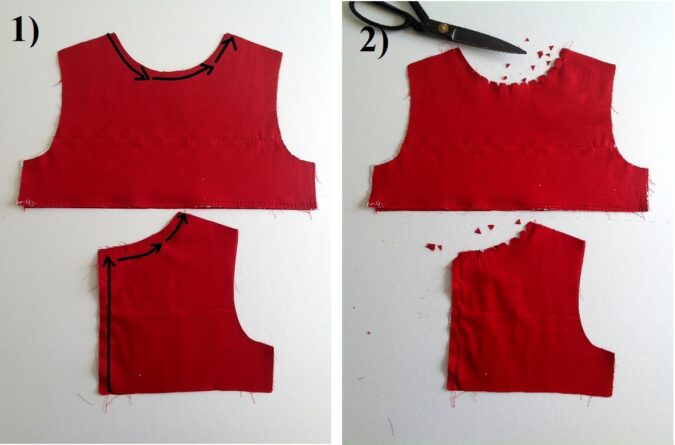
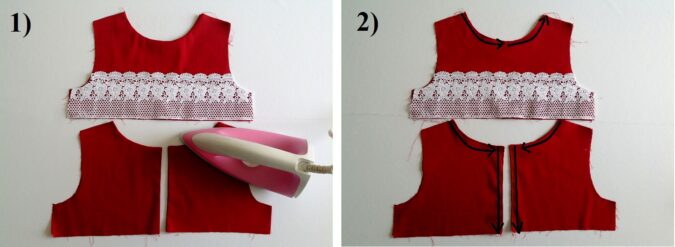
1) Take the front bodice and the front lining pieces, layer them with the right sides together, aligning the edges and sew along the neck, leaving a 3/8-inch seam. Similarly, take one of the back bodice pieces and a lining piece, layer them with the right sides together, aligning the edges and sew along the button edge (center back) and neck, as marked by the black line. Repeat the same with the remaining back bodice and lining pieces. 2) Clip the curves and cut the corners to reduce the bulk in the seam.
1)) Turn over to the right side and press flat for the front and back bodices. 2) Topstitch around the neck for the front bodice and along the neck and center back for the back bodices, to make it clean and crisp.
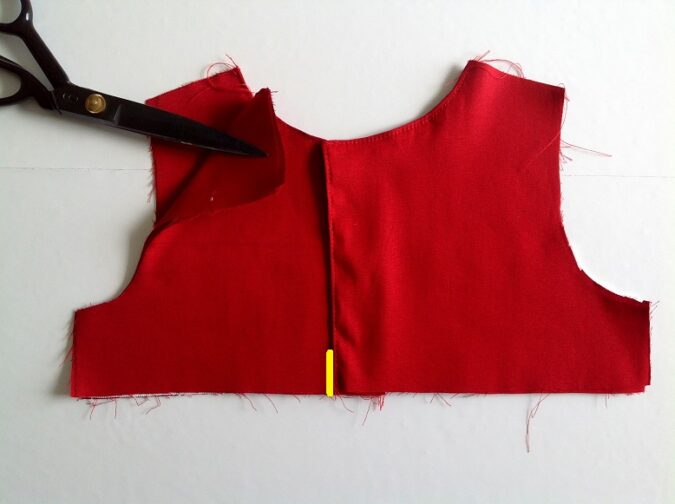
Layer the front and back bodices with right sides together, aligning the side seams and shoulder seams. You’ll notice that the back pieces overlap at the center to create the button opening. Mark a small line along the lower edge of the back to indicate the extent of the overlap.
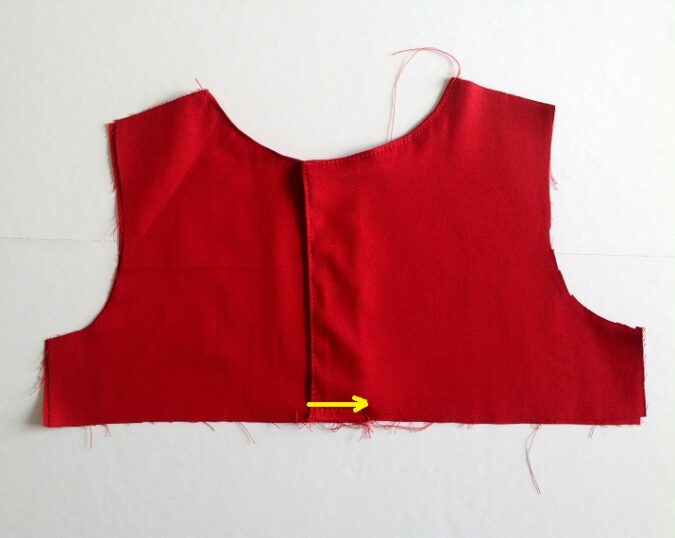
Sew the overlapping part of the back bodice shut, 3/8-inch from the lower edge.
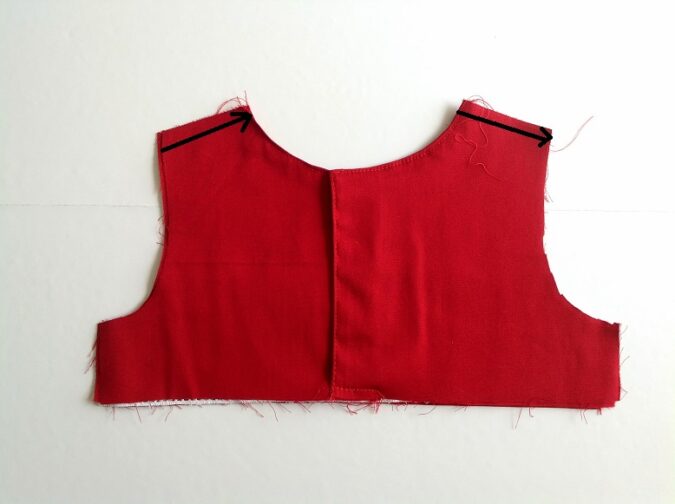
Let’s sew the front and back bodices together.
Layer the front and back bodices, with the right sides together, lining up the side seams and shoulders. Sew the shoulders shut.
Let’s finish the sleeves. For that we first finish the hem.
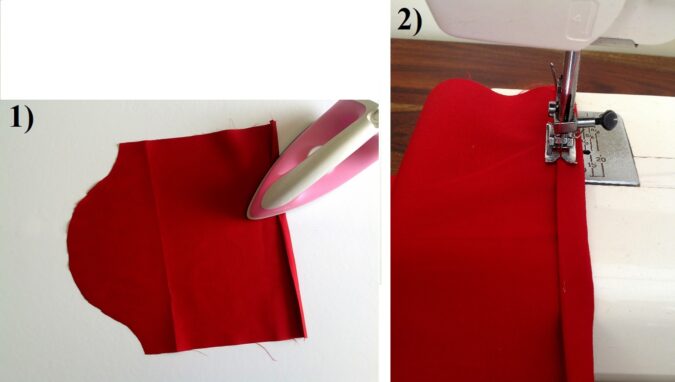
1) Fold the straight edge of the sleeve pieces by 3/8- inch and press. Fold again by ½- inch and press once more. 2) Sew the hem along the edge of the fold.
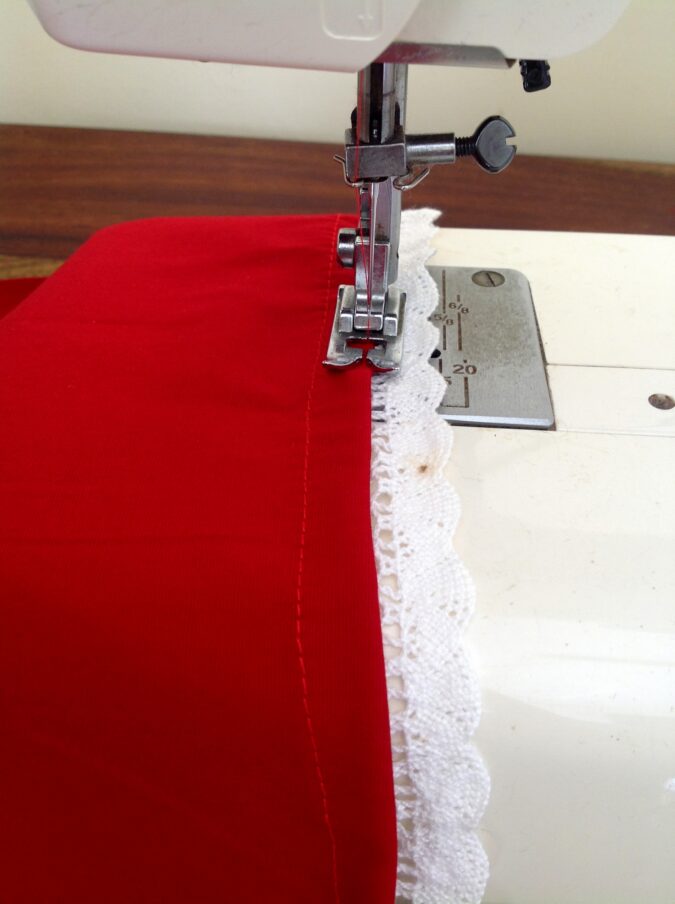
Take the thinner lace for the sleeve hem. (You can measure by placing it along the lower edge of the sleeve and trimming off the excess). Place the lace underneath the lower edge of the sleeve, allowing it to extend inward by about 1/2 inch. Topstitch along the edge to secure it in place.
Let’s attach the elastic.
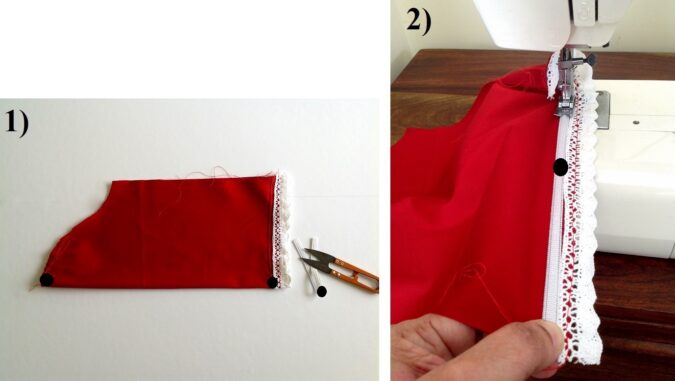
1)Take the required length of the elastic, referring to the table- 4 above, cut it into 2 equal pieces. Fold it again in half and mark the center. Similarly, fold the sleeve in half lengthwise and mark the center along the lower and upper edge (**the center of the upper edge is marked to attach the sleeve to the bodice later). 2)Turn the sleeve over to the wrong side. To attach the elastic to the sleeve, place it over the hem, just below the lace. Begin sewing to secure the elastic, stretching it as you sew to match the center marks. Make sure to sew back and forth a few times at the start and finish for strength.
Next, we need to gather the upper edge of the sleeve. For that turn the upper thread tension of your machine to zero and stitch length to the longest to get a basting stitch.
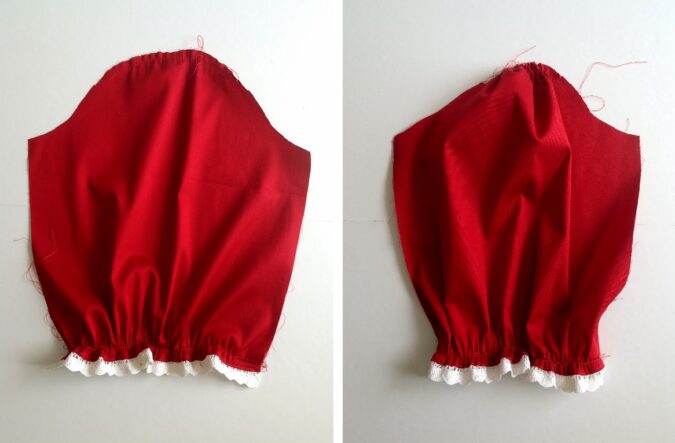
1)Sew a basting stitch between the gathering points marked earlier. 2)Pull the thread from the bobbin gently to gather it. Repeat the steps on the other sleeve to finish it in a similar manner.
Let’s attach the sleeves to the bodice.
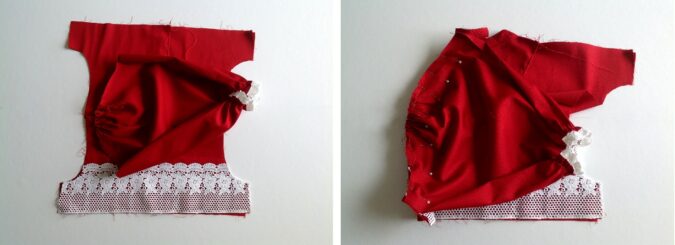
Place the sleeve over the bodice with right sides together, aligning the center mark of the sleeve with the shoulder seam. Adjust the gathers so they are evenly distributed on both sides of the shoulder seam and the sleeve fits the armhole. Pin the sleeve to the armhole, starting from the center and working your way toward the sides.
Bring the machine settings back to normal and sew them together, removing the pins as you go.
Repeat the steps on the other armhole with the other sleeve.
Our bodice is almost done. We move on to the skirt part.
First, we need to hem the three edges of the skirt overlay pieces for both the front and back.
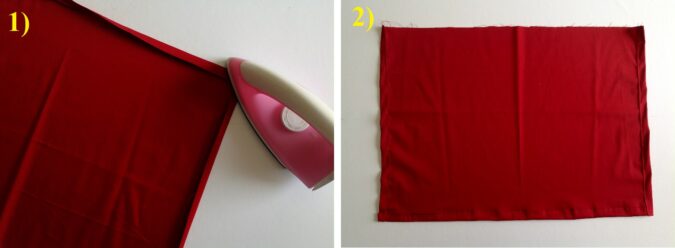
Fold the two short edges and one long edge towards the wrong side by 1/2- inch twice and press to set. Sew the hem down along the edge of the folds all around. Repeat on the back piece.
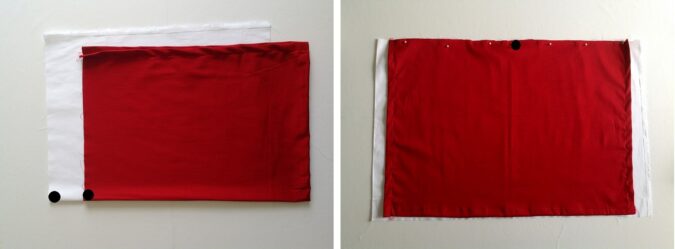
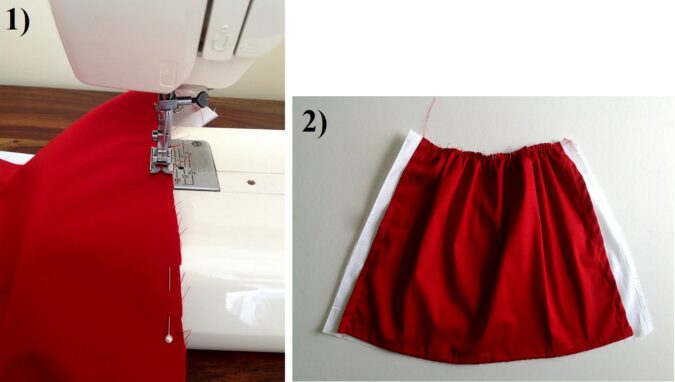
To find the center of the front skirt overlay and lining pieces, fold each piece in half lengthwise and mark the top center. Place the overlay and lining piece, with the right side up, aligning the top edges and matching the center marks. Pin them together along the aligned top edges.
Let’s gather the skirt.
Turn your machine settings to get a basting stitch.
Sew a basting stitch along the pinned edge of the front skirt layers. Gently pull the bobbin thread to gather the skirt. Adjust the gathers to make them even and to match the width of the lower edge of the front bodice.
Repeat the same with back skirt overlay and lining pieces.
Let’s attach the bodice to the skirt.
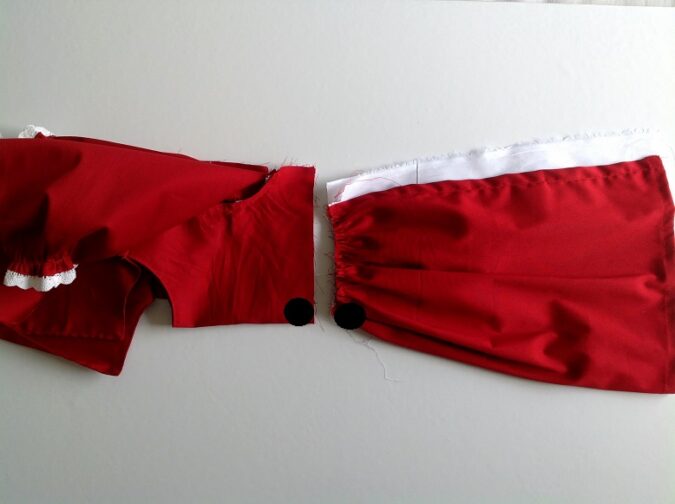
Fold the front bodice and the gathered front skirt in half lengthwise. Mark the center along the lower edge for the front bodice and along the upper gathered edge for the skirt.
With the right sides together, line up the lower edge of the front bodice with the upper edge of the front skirt, matching the center marks and pin all along. Turn the machine settings back to normal and sew the skirt to the bodice. Zigzag to prevent fraying.
Turn over to the right side and topstitch along the seam line of the skirt and bodice to make it look neat and crisp.
Repeat the steps with the back bodice and back skirt.
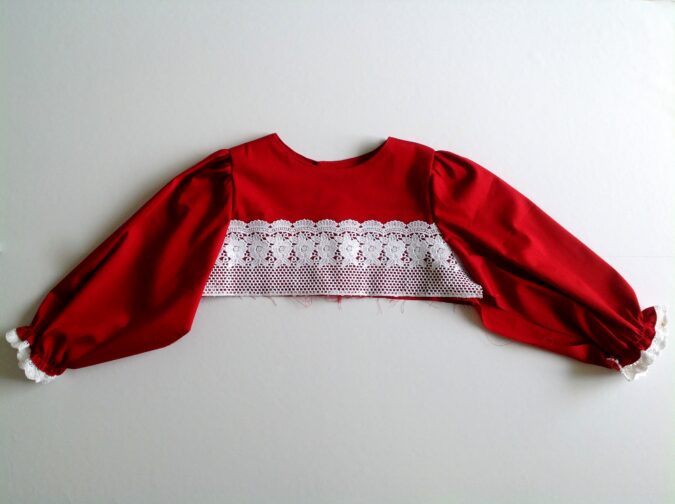
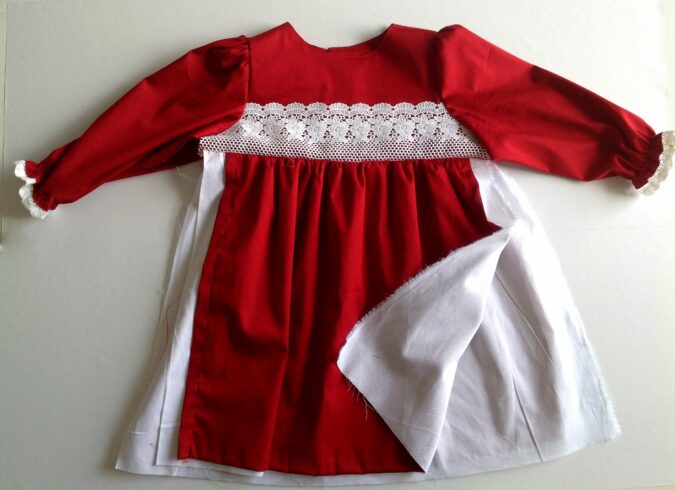
Your dress will look almost done but with the side seams open.
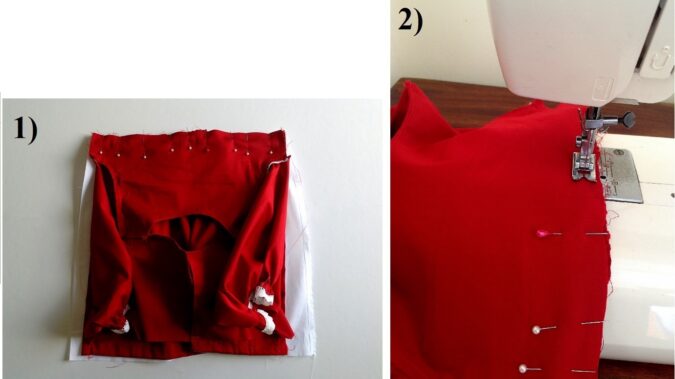
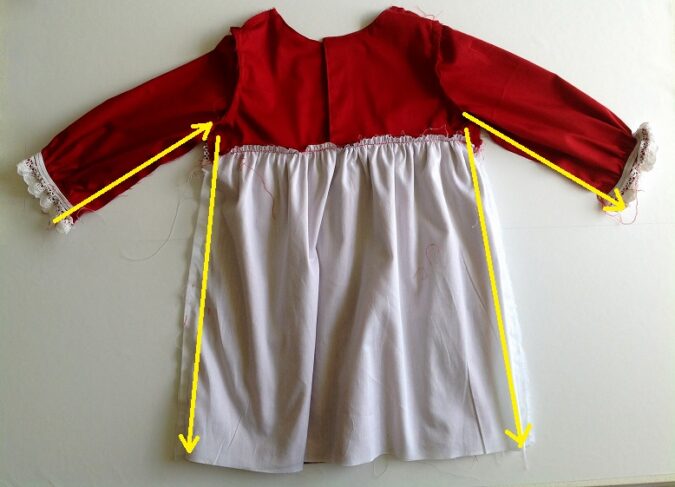
Turn the dress to the wrong side. Align the side seams of the sleeve and the dress, and pin them in place. Starting at the lower edge of the sleeve, sew up along the sleeve seam to the armhole. With the needle down, lift the presser foot, pivot the fabric, and continue sewing down the side seam of the dress. Repeat on the other side.
Let’s hem the lower edge of the skirt lining.
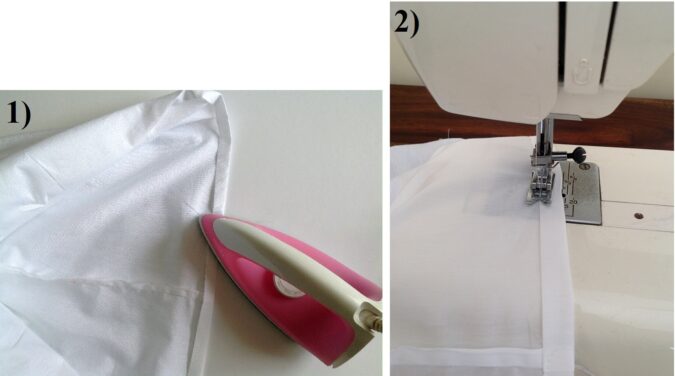
1)Fold the lower edge of the skirt lining by 1/2- inch twice towards the wrong side and press 2) Sew the hem down along the edge of the fold.
Next, we attach the lace along the hemline of the skirt lining.
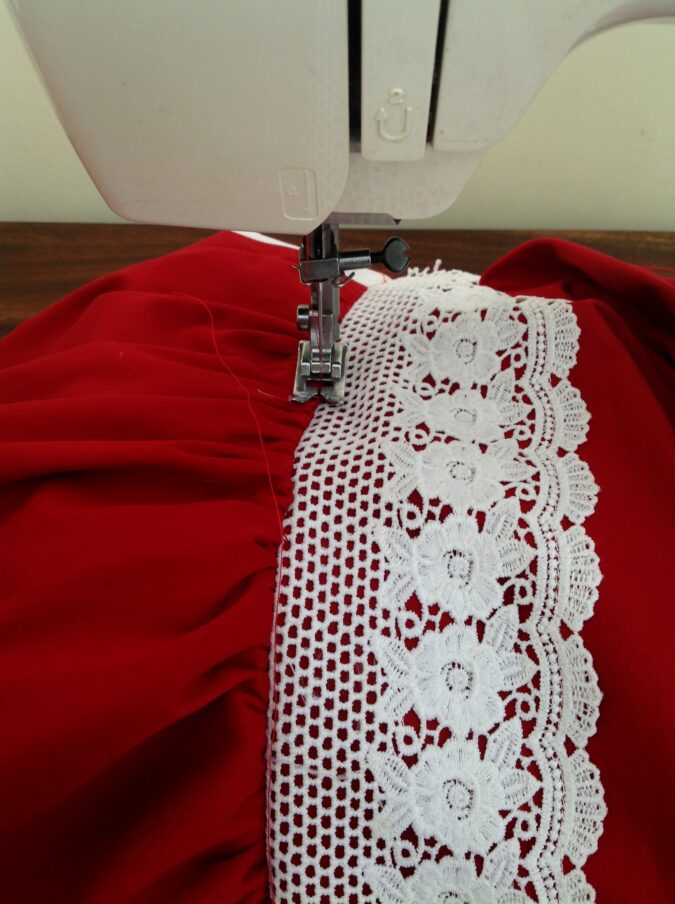
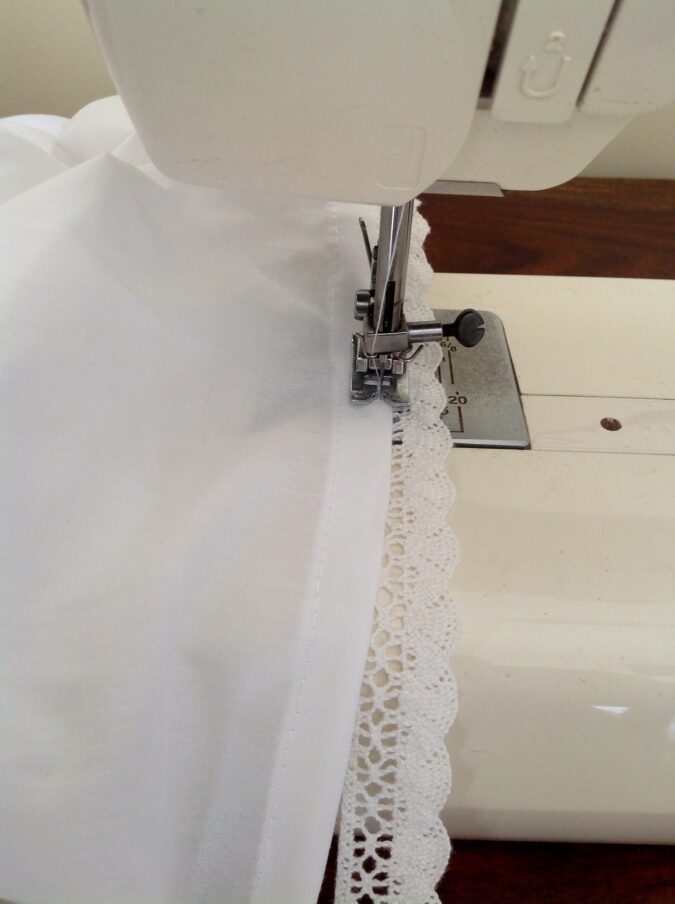
Take the remaining 1.5-inch- wide lace and position it just below the hemline of the skirt lining, with about 1/2 inch extending to the inside. Pin it in place and sew all around the hem to attach. When you reach the starting point, trim off any excess lace, leaving a 1/2-inch overlap, and stitch it down for a neat finish.
Let’s attach the KAM snaps.
Starting from the top edge, make markings at 2-inches gap from each other, on the right side of one of the back pieces and attach the KAM snaps. Make markings with a 2-inch gap on the wrong side of the other back piece also and attach the complimentary KAM snaps (picture for illustration purpose).








would love the pattern